Choosing the Right PID Tuning Software: What to Look for in 2026
Est. Reading: 4 minutes
Choosing the Right PID Tuning Software: What to Look for in 2026 7
In modern industrial process control environments, the performance of PID control loops directly impacts product quality, plant safety, and energy efficiency. Despite advances in automation technologies, poorly executed PID controller tuning remains one of the most common causes of process variability and operational inefficiencies.
As we move into 2026, traditional PID tuning approaches based on trial-and-error or manual adjustments are no longer sufficient. Instead, organizations are increasingly adopting data-driven process control solutions that allow engineers to identify accurate process models and optimize controller parameters based on their real performance objectives.
However, with many tools available on the market, selecting the best PID tuning software can be a challenge. Not all solutions provide reliable system identification, robust disturbance handling, or the ability to select one or several PID tuning objectives. This blog outlines the key capabilities that define best-in-class PID tuning software in 2026 and explains how PITOPS can tune and optimize PID controllers. In this blog we will be concentrated more on the PID tuning capabilities, while in the next blog, we will explain what powerful multivariable closed-loop system identification in PITOPS can do.
Many PID tuning technologies still have only one objective upon they tune PID controllers, and this is step setpoint change. In the reality, you will never see that all PID controllers in the plant have only one and common objective, how they operate. If you just compare flow, temperature and level controllers, you will see major difference in their operating objectives. Flow controllers mostly operate based on the setpoint step changes made by operator, or complex setpoint changes; made by upper logic, if they are in cascade mode. Many times, flow controllers suffer from control valve problems as well. While, temperature PID controllers sometimes get step or ramped setpoint changes, they mostly operate to reject disturbances. In level controllers nobody is changing the setpoint, and they purely operate to fight against several types of disturbances. Experienced plant control room engineers should know and understand what is the objective of each PID controller in plant and optimize them based on that. Optimizing all PID control loops based on only one and common objective is not a good practice, and it will not provide the wanted effect and optimal operation of a certain PID controller.
What are the real challenges against which PID controller could be fighting?
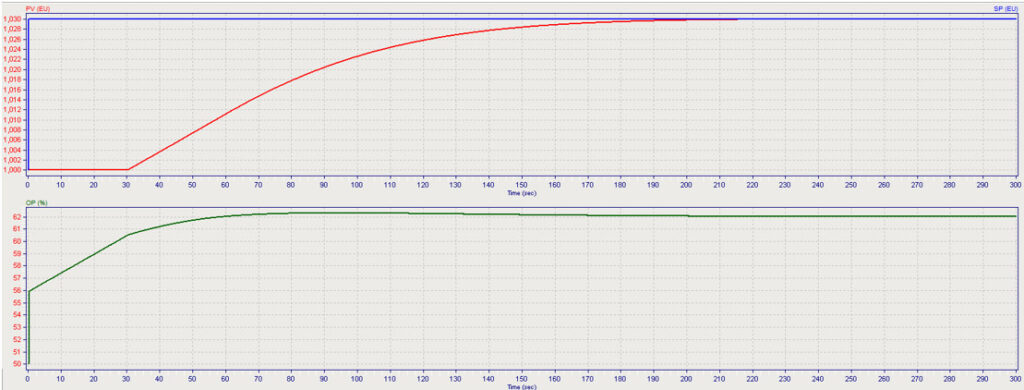
In some PID controllers, operator continuously changes the setpoint in order to keep material or plant operation in balance. These PID controllers should be tuned based on the step-change of the setpoint. The following trend shows this type of tuning, where the red curve presents PV, blue SP, and green the PID.OP.
Choosing the Right PID Tuning Software: What to Look for in 2026 8
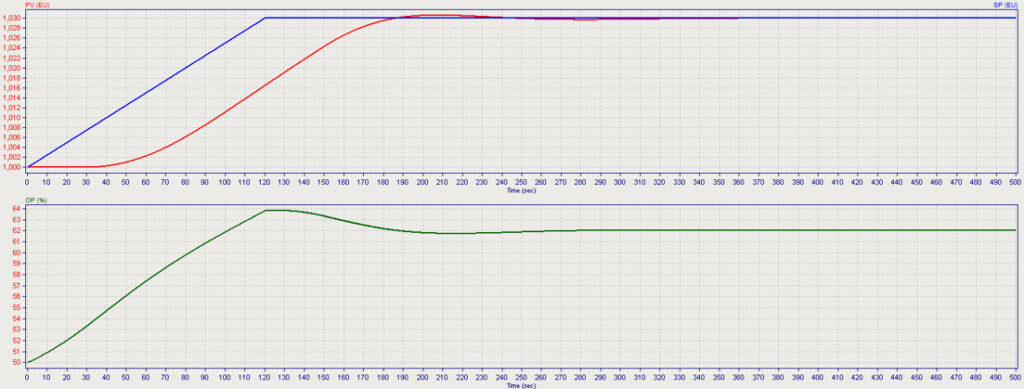
In other PID controllers, operator continuously changes the setpoint, but not as a step. Due to process restrictions and limitations, the setpoint is changed rather as a ramp. These PID control loops should be tuned based on the ramp-changes of the setpoint. The following trend shows this type of tuning, where the red curve presents PV, blue SP, and green the PID.OP.
Choosing the Right PID Tuning Software: What to Look for in 2026 9
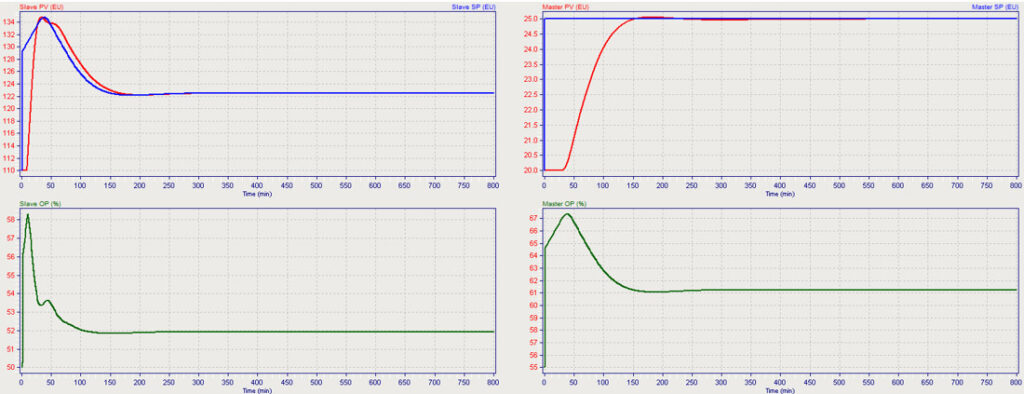
Many PID controllers in the plant act in Cascade or in Program mode. In some systems this is called Cascade External, Remote External, Auto External or Auto Remote mode. These PID control loops get setpoints from upstream PID controller or from some external code, program or device. These PID controllers do not have step or ramped setpoint changes, but their setpoint changes in a continuously manner with a complex trajectory. The following trend shows this type of tuning, where the red curve presents PV, blue SP, and green the PID.OP for Master and Slave PID control loops.
Choosing the Right PID Tuning Software: What to Look for in 2026 10
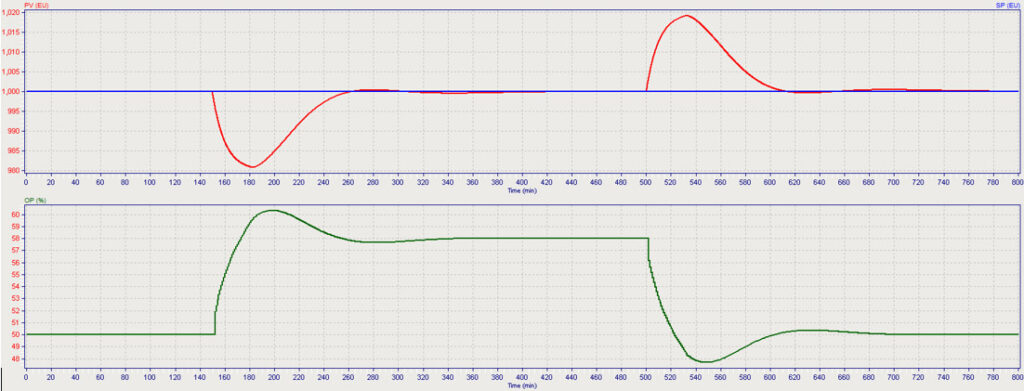
There are PID controllers which do not change setpoints often, but unmeasured disturbances are affecting their daily operation. These PID controllers should not be tuned on the setpoint change, but rather on the disturbance rejections. Also, during tuning of these PID controllers, user should understand the type of disturbance, such as: pulse, step, ramp or sine. This way the disturbance rejection PID parameters could be optimally set. The following trend shows this type of tuning, where the red curve presents PV, blue SP, and green the PID.OP.
Choosing the Right PID Tuning Software: What to Look for in 2026 11
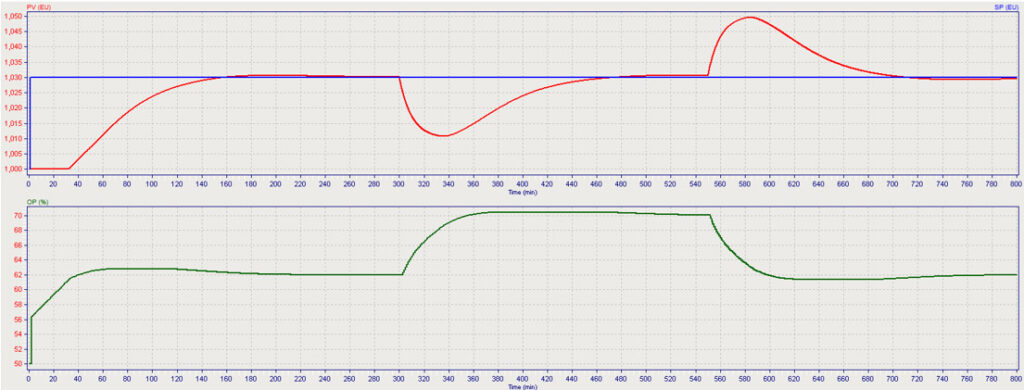
As the plant and equipment become older, there will be PID controllers which should be optimized based on several objectives, not only just one. Some of them, in addition to the already elaborated above objectives, could have control valve problems, such as stiction, deadband and hysteresis. Others could have nonlinear control valve curves, or limitations in their moves (rate of change limits), since large moves can cause equipment issues or downstream disturbances. In these cases, the engineer should tune and optimize these PID controllers on multiple objectives, to satisfy multiple tasks imposed by the process or equipment limitations. The following trend shows tuning based on the setpoint change plus disturbance rejection, where the red curve presents PV, blue SP, and green the PID.OP.
Choosing the Right PID Tuning Software: What to Look for in 2026 12
Therefore, the challenge of how to tune and optimize PID control loops is not straightforward, like many thinks.
Final Thoughts
PID control remains the backbone of industrial process control, but effective PID tuning requires much more than applying a single standard method. Real industrial processes operate under a wide range of conditions: setpoints may change rapidly or gradually, disturbances continuously affect the system, cascade structures introduce complex interactions, and aging equipment can impose additional constraints.
For this reason, modern PID tuning software must be capable of addressing multiple control objectives rather than optimizing only for idealized step setpoint changes. Engineers must understand how each control loop operates in the plant and tune controllers according to their real operational role – whether that is setpoint tracking, disturbance rejection, cascade interaction, or a combination of several objectives.
Advanced tools such as PITOPS support this approach by enabling engineers to analyze real process data and optimize PID controllers based on the true dynamics and constraints of the system. By aligning controller tuning with real process behavior, plants can achieve improved stability, higher efficiency, and more reliable operation.