Why Raw Material Variability and Non-linear Process Gain Break Your Control Loops
Est. Reading: 4 minutes
Why Raw Material Variability and Non-linear Process Gain Break Your Control Loops 3
Industrial processes rarely behave as textbook models suggest. Raw materials arrive with varying compositions, ambient conditions fluctuate, equipment degrades, and operating points shift. Traditional fixed-parameter PID controllers designed for "average" conditions struggle to maintain optimal performance across these varying scenarios. Understanding why they fail is the first step toward fixing them.
The Cost of Process Variability
Raw Material Variability
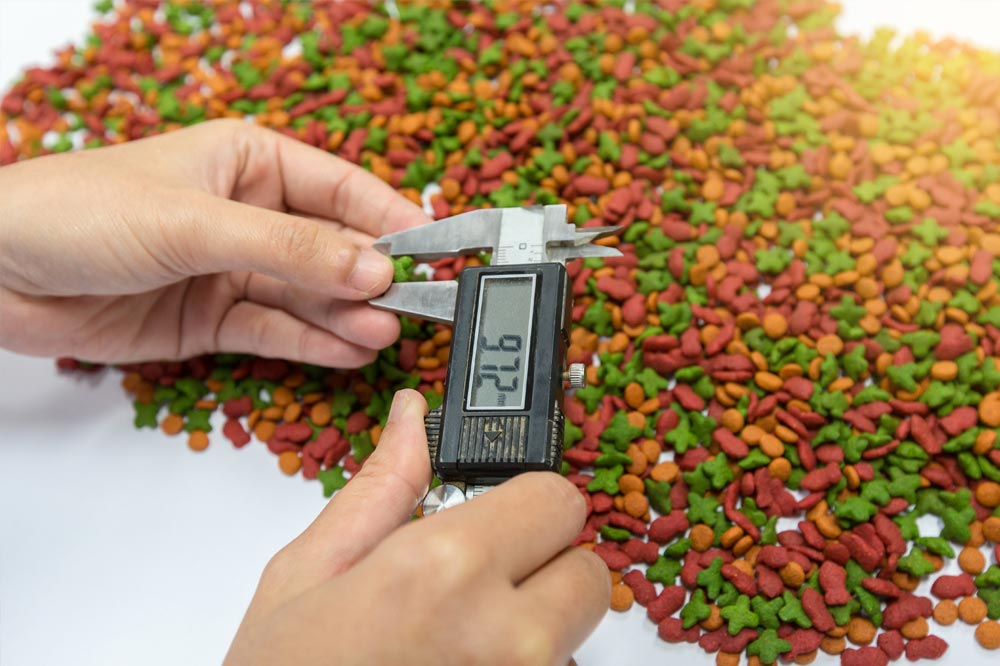
Raw material input variability represents one of the most significant challenges in modern manufacturing. In food processing alone, climate change and supply chain fragmentation have intensified this challenge, with studies indicating that variability contributes to up to 20% food loss and severe margin erosion.1
Consider a potato processing plant producing tens of thousands of tons annually. Even a 1% loss in yield translates into hundreds of tons of lost products, costing hundreds of thousands of dollars per year.1 The challenge extends far beyond food processing. In petroleum refining, crude oil quality varies significantly between sources and even between shipments. In pharmaceutical manufacturing, active ingredient concentrations fluctuate. In pulp and paper, wood chip moisture content changes seasonally. Each of these variations demands different control responses for optimal operation.
Non-linear Process Gain: When Constants Aren't Constant
Most feedback control techniques, including the PID algorithm, rely on the principle of linearity, a guarantee that a Y% change in the process variable follows an X% change in control effort, with a fixed ratio (gain) between X and Y regardless of operating point.2 In reality, that ratio changes constantly.
A classic example is pH control:
pH Range
Process Gain Characteristic
Low (acidic)
Low gain, large reagent changes needed
Neutral (6–8)
Very high gain, small changes cause large pH swings
High (alkaline)
Low gain, large reagent changes needed
A controller tuned for the acidic range would be dangerously aggressive in the neutral zone. One tuned for neutral would be sluggish everywhere else. 2
Similar non-linearities appear in:
Heat exchangers: Gain varies with flow rates and temperature differentials
Distillation columns: Gain depends on reflux ratios and compositions
Compressors: Gain changes across the operating envelope
Reactors: Gain shifts with conversion rates and catalyst activity
Why Fixed-Logic Control Falls Short
For decades, industrial automation has relied on fixed control systems where controllers execute logic based on static, pre-tuned parameters. These systems are rigid, reliable, and excellent at maintaining consistency, but they struggle with variability.3
Most PLCs and SCADA systems operate on fixed setpoints. They cannot detect when the underlying process model no longer matches reality. Operators compensate manually, but by the time deviation is visible, the loss has already occurred.1 In modern plants facing material variability, labor shortages, and higher throughput demands, traditional static optimization in a dynamic environment leaves facilities perpetually one step behind their raw materials. How it looks like?
Proven Solutions That Work Today
Gain Scheduling
Gain scheduling provides a proven approach for processes with known non-linear characteristics. The technique uses auxiliary measurements that correlate with process non-linearities to adjust controller parameters as operating conditions change.4
Method
Description
Best Application
Discrete Scheduled PID
Multiple PID parameter sets selected by operating region
Clear operating regimes
Parameterized PID
Continuous parameter variation with scheduling variable
Smooth transitions
Characterizer
Amplifies/attenuates PV to make process appear linear
Well-understood non-linearities
Modern auto-tuning controllers can populate gain schedules automatically, performing tuning the first time the process variable enters a particular range and retrieving those parameters whenever conditions return.2PiControl Solutions' PITOPS takes this further by using NC-GRG mathematical optimization to compute optimal PID parameters across multiple operating regions from historical plant data, without requiring disruptive step tests.5
Why Raw Material Variability and Non-linear Process Gain Break Your Control Loops 4
Feedforward Control
Feedforward control directly addresses raw material variability by measuring disturbances before they affect the controlled variable and taking preemptive corrective action. Unlike feedback control, which must wait for disturbances to corrupt the output, feedforward control can achieve near-perfect disturbance rejection when properly designed.6
Practical applications include fuel gas heating value compensation, feed composition compensation, ambient temperature compensation, and moisture content compensation.7 The key prerequisite is that the disturbance must be measurable. Fortunately, modern instrumentation, including online analyzers, NIR sensors, and machine vision systems, makes an increasing range of raw material properties measurable in real time.6
Self-Tuning Controllers
Self-tuning controllers adjust control parameters based on an identification model that continuously estimates the parameters of the process being controlled.8 The controller maintains an internal model and updates it in real time through a continuous cycle: system identification, controller design, parameter update, and repeat.
In practice, deploying self-tuning controllers across many PID loops can be challenging without the right tooling. PiControl Solutions' SUPERTUNE provides a practical advantage here: it is a fully automatic and auto-adaptive online PID tuning technology that continuously monitors loop performance and adjusts PID parameters in real time, without intrusive step tests or operator intervention.5 SUPERTUNE handles loops with severe nonlinearities, noisy signals, or very fast or very slow dynamics.
What's Next
These classical methods, gain scheduling, feedforward control, and self-tuning controllers, solve a wide range of industrial variability problems today. But what happens when processes are too complex, too coupled, or too fast-changing for classical approaches? That is where AI-driven adaptive control, neural networks, and multivariable predictive control enter the picture. Read our companion blog: How AI and Advanced Adaptive Control Are Transforming Industrial Process Optimization.
Need help taming variability in your plant? PiControl Solutions offers PITOPS, SUPERTUNE, and expert consulting to optimize your control loops using your existing historical data, with no disruptive step tests. Contact us at info@picontrolsolutions.com or visit www.picontrolsolutions.com.
References
1: Polysense.ai, "Mastering Food Manufacturing Stability: Dynamic Control to Overcome Raw Material Variability," October 2025.
2: Control Engineering, "Gain scheduling handles nonlinear processes," Vance VanDoren, April 2025.
3: Wawelk.org, "Moving Beyond Fixed Logic: The Future of Adaptive Control," November 2025.
4: ScienceDirect, "Dynamic gain scheduled process control," Journal of Process Control, 1998.
5: PiControl Solutions, "PID Controller Auto-Tuning Methods," November 2025.
6: Control Guru, "Static Feed Forward and Disturbance Rejection," Doug Cooper and Allen Houtz, April 2015.
7: Fiveable, "Feedforward Control - Control Theory Class Notes," August 2025.
8: SMB CEO, "Adaptive Control Systems in Industrial Automation: Principles and Applications," June 2023.